Monday, April 29, 2013

Long Lost Friends

In the 1970s, when my mother was in college, she, her sister and younger brother lived in an apartment in Manila with another set of siblings from Pangasinan. They lived like one family, sharing meals and stories. The two families had similar backgrounds, both came from the province, were from poor families and both had many siblings. Years passed and after graduating from college and starting new jobs in the city, they lost touch.

Forty-three years later, through Facebook, Inay was able to reconnect with her roommates from Pangasinan. Messages were exchanged, as well as mobile numbers, and they were able to meet again after decades without communication. Truly, a strong relationship and beautiful memories will never be forgotten. They were able to visit our home twice and they invited Inay to visit them in Pangasinan for their mother's 90th birthday.


Monday, April 1, 2013

Holy Week in the Philippines

It's out!

The article I wrote for my cousin's food website is already posted. You can read it here. Sorry, my post about this news is late, tho.


Monday, March 25, 2013

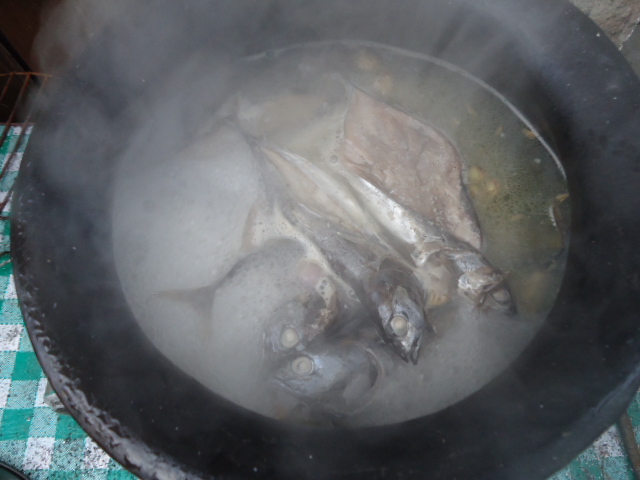
Sinaing na Tulingan

Tulingan or Mackerel tuna is a type of fish abundant in our province. They have a silver-gray color and always looked firm and fresh. Usually, it is cooked as a Sinaing (boiled) dish. During this Holy Week, almost all households in our community cook Sinaing na tulingan.


I grew up having Sinaing na tulingan almost every week and having it is not something I look forward to during mealtimes. As they say, when you have something all the time, it loses its charm and significance.

But now, I'm starting to revive my appreciation to this ubiquitous fish. Sinaing na tulingan is part of my culture and history and I always think of my former colleague who always got excited when I brought her this dish.

Fish vendors in some markets can prepare tulingan for you. They will gut the fish, score both sides and press the body. The flatter, the better.


Here is how we cook Sinaing na tulingan at home:

1. Salt the prepared tulingan. Don't be shy on the salt.


2. At the bottom of a clay pot, put banana stalks, banana leaves, crushed garlic, ginger, and chilies. Sometimes, we put pork fat for more flavor.


3. Place the tulingan in the clay pot and put water, just about the middle of the pot.

4. When the water comes to a boil, lower the fire and let it simmer until the fish is very tender and much of the water has evaporated. The juice of the fish will mix with the water, creating a salty, fishy, sauce.


Here is the finished product. It may smell funky to unfamiliar noses but it's delicious, especially when eaten with tomatoes and onions. Tada!


Sunday, March 24, 2013

Thursday, March 21, 2013

Dynamite - The Appetizer

Last weekend, my sister brought her friends from the office to our home. They would be going to a beach resort in Laiya and they spent the night in our house.

Inay and I were busy preparing their food for dinner, breakfast, and merienda. Our household was not used to serving meals for guests but, entertaining friends and colleagues from the city was an exception.

My sister told me that they might be drinking that night so I prepared an appetizer -- the Dynamite. It is a spicy appetizer made from siling haba (green chilies), cheese, and lumpia wrapper (spring roll wrapper). 

Tip: Buy green chilies used in cooking Sinigang, they are midly spicy. The chilies we bought were long, about 3-4 inches, and they were super spicy!


Here are the steps for making Dynamite:
1. Wash the green chilies. Slice lengthwise, but not totally slicing the chili in half, and remove the seeds.
2. Cut the cheese approximately the size of the chili.
3. Cut the lumpia wrapper in half.


4. Put the cheese inside the chili and roll inside the lumpia wrapper.


5. Fry the chili rolls until golden brown. Serve with mayonnaise or ketchup.

Unfortunately, I forgot to take a picture of the finished product.

 
Free Hit Counter